


What is Neonatal Diarrhoea?
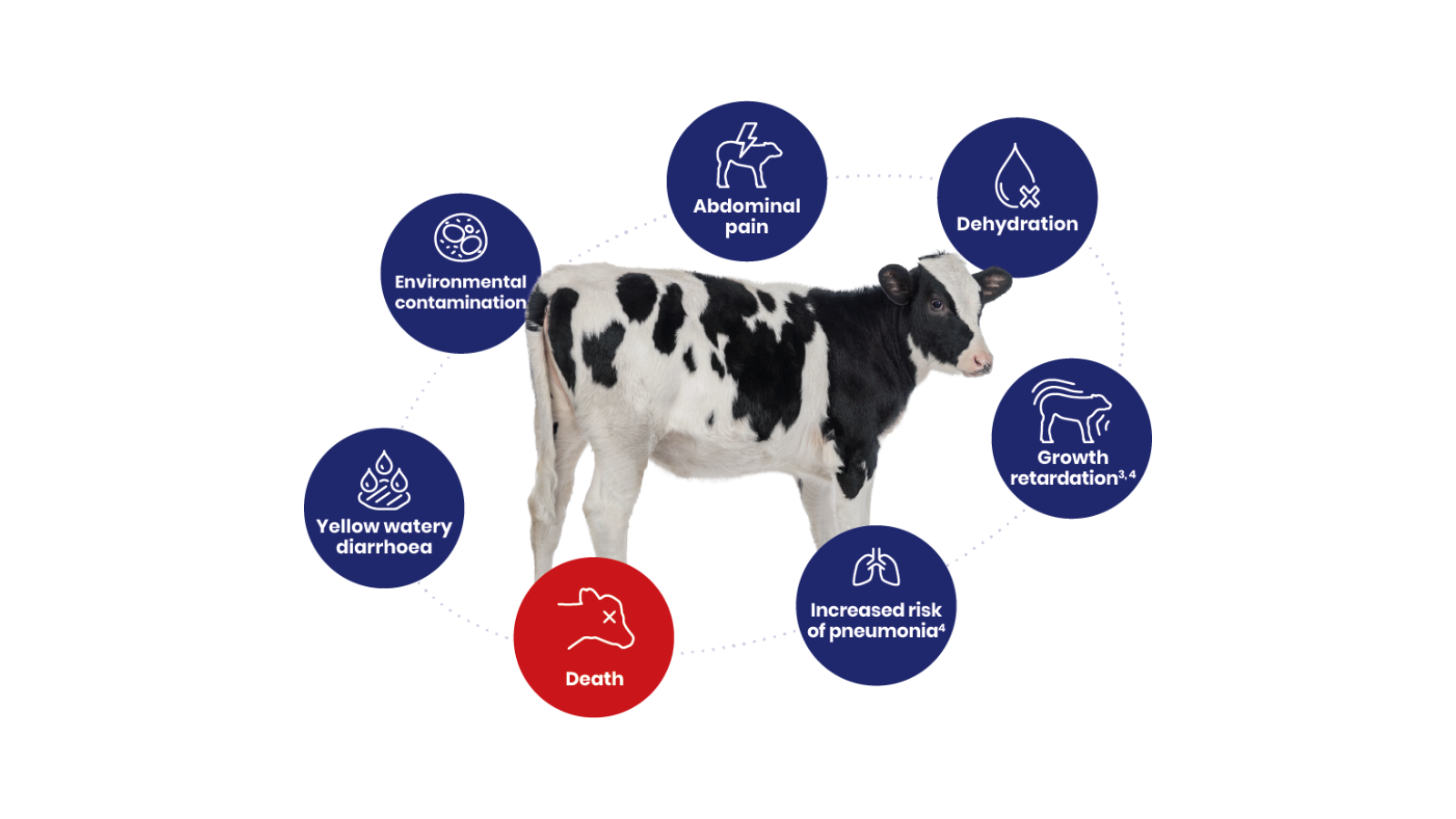
Neonatal diarrhoea (ND) is a persistent challenge for ruminant farms worldwide. Globally, it is a leading cause of calf mortality and morbidity within the first thirty days of life. Calves suffering from neonatal diarrhoea are at higher risk of other infectious diseases such as bovine respiratory disease. They typically experience slower growth and can face serious long-term consequences such as delayed first calving. Consequently, ND has a large impact on farm sustainability, and overall herd performance, making effective management crucial.
Understanding the causes: major enteropathogens
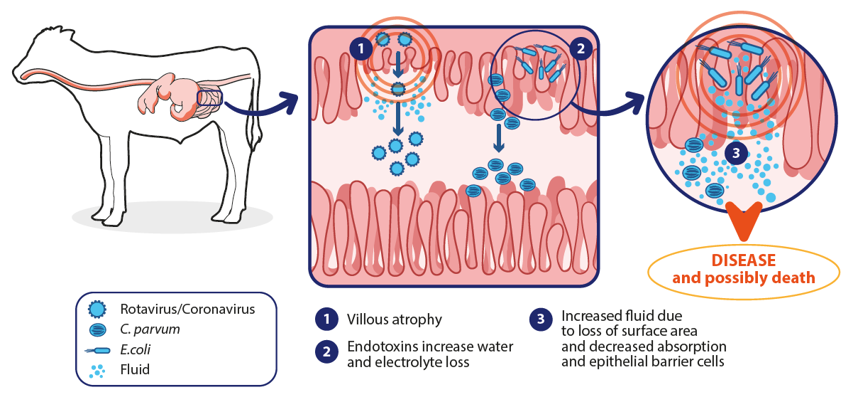
Neonatal diarrhoea can be caused by viruses, bacteria such as enterotoxigenic Escherichia coli F5/K99 or Salmonella spp., or parasites (Cryptosporidium parvum, Giardia duodenalis, Eimeria spp.). Neonatal calves are highly susceptible to infections with colibacillosis during their first four days of life while infections with cryptosporidiosis are most prevalent during the first to third weeks of age. Cryptosporidium parvum is one of the most frequently identified causes of neonatal diarrhoea with a global prevalence in dairy calves of 21.9%. Mixed infections of these infectious causative agents are often observed.
Diagnosis and rapid testing
Identifying the specific pathogen(s) responsible for neonatal diarrhoea is essential for effective management. Accurate diagnosis of the causative agent is crucial for developing targeted treatment and prevention strategies. In this context, rapid diagnostic tests, are highly beneficial. These on-farm tests provide results in less than 10 minutes and can accurately identify pathogens like Cryptosporidium, enabling timely and appropriate interventions.
Key risk factors, treatment and prevention
· Key risk factors: hygiene and colostrum management. Poor hygiene and inadequate colostrum management significantly increase the risk of neonatal diarrhoea. Ensuring clean calving environments and high-quality colostrum feeding practices are essential preventative measures.
· Treatment: rational use of antimicrobials. Not all diarrhoeic calves require antibiotics. Calves that appear strong and maintain a good appetite can often recover without antimicrobial interventions, supporting a rational and sustainable approach to treatment. On the other hand, calves with clinical cryptosporidiosis can benefit from a targeted treatment intervention.
· Prevention: vaccination of pregnant cows. Vaccinating pregnant cows is one of the most effective ways to protect against neonatal diarrhoea. This strategy enhances colostrum quality, providing calves with better immunity from birth.
Managing neonatal diarrhoea requires a multifaceted approach, including preventive measures like dam vaccination, improved hygiene, and proper colostrum management, along with targeted diagnostics and treatments when necessary. By implementing these strategies, farmers can safeguard calf health and enhance the profitability of their operations.
For more in-depth resources on managing neonatal diarrhoea, visit our blog.
Related products



Related services

Cevolution
CEVA is fully committed to helping maintain the efficacy and availability of antibiotics and anti-inflammatory for the health and welfare of animals while preserving our planet.
